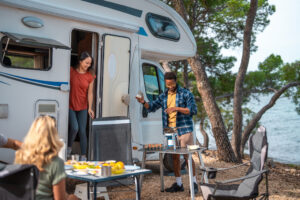
There was a time when heading to a campground meant disconnecting entirely from the digital world. For many campers, that’s still the goal. But for a growing number of outdoor enthusiasts, remote workers, and families who split time between nature and everyday life, 5G internet for camping has become a genuine priority rather than a contradiction in terms.
Whether the goal is streaming a movie after a long hike, keeping up with work emails from a lakeside campsite, video calling family from a mountain campground, or simply having emergency navigation and communication capabilities in unfamiliar terrain, reliable camping internet changes the quality of the outdoor experience in meaningful ways.
At RingPlanet 5G wireless internet, we help campers, RV travelers, and outdoor enthusiasts find connectivity solutions that work in the field, not just in a marketing brochure. This guide covers everything worth knowing about 5G internet for camping in 2026, from how it works in practice to which campground environments support it best.
How 5G Internet for Camping Actually Works
Before evaluating whether 5G internet is the right camping connectivity solution, understanding how the technology delivers internet at a campsite helps set realistic expectations.
5G internet for camping uses cellular network infrastructure, specifically the 5G and 4G LTE towers that mobile phone carriers have deployed across the United States, to deliver wireless broadband to a portable router or mobile hotspot device. The device connects to the nearest available tower, receives a data signal, and distributes Wi-Fi to connected devices within range.
The key variables that determine 5G camping internet performance are tower proximity, carrier network quality at the specific campground location, and the frequency bands available at that location.
5G networks operate across multiple frequency bands with different performance characteristics. Low-band 5G covers wide geographic areas and penetrates terrain effectively but delivers speeds comparable to advanced LTE rather than the multi-hundred Mbps speeds associated with 5G. Mid-band 5G delivers substantially faster speeds, typically 100 to 400 Mbps, but has shorter range than low-band coverage. High-band millimeter wave 5G delivers the fastest speeds but has very limited range and is primarily available in dense urban environments rather than campground settings.
For most camping environments, low-band and mid-band 5G coverage determines what’s actually available at a given site.
Where 5G Internet for Camping Works Best
The geographic diversity of American campgrounds means 5G internet performance varies enormously from one site to the next. Understanding which campground environments offer the strongest 5G connectivity helps campers plan realistically.
Campgrounds Near Urban and Suburban Areas
State parks, county parks, and private campgrounds within 20 to 40 miles of major cities typically fall within strong 5G coverage from multiple carriers. Sites like Shenandoah National Park campgrounds near the Northern Virginia metro, Anza-Borrego Desert State Park campgrounds east of San Diego, and Starved Rock State Park campgrounds near Chicago all benefit from proximity to dense carrier infrastructure.
In these environments, 5G internet for camping delivers speeds comparable to home broadband, easily supporting streaming, remote work, and multi-device connectivity throughout a camping stay.
Campgrounds Along Major Highway Corridors
Interstate highway corridors receive strong carrier infrastructure investment because of the combination of commuter, freight, and travel traffic they serve. Campgrounds located within a few miles of major interstates generally benefit from this infrastructure investment, with decent to strong 5G or LTE coverage from most major carriers.
National Park and Wilderness Area Campgrounds
This is where 5G camping internet faces its most significant limitations. The most remote and scenic national park campgrounds, precisely the destinations that attract serious outdoor enthusiasts, are often the least connected. Interior campgrounds in parks like Great Smoky Mountains, Glacier, Olympic, and many others sit beyond reliable cellular coverage from most carriers.
Campers planning to rely on 5G internet at remote national park campgrounds should research coverage at the specific campground before departure rather than assuming that national park proximity equals national park connectivity.
Private RV Parks and Campground Resorts
Modern private campground resorts, particularly KOA and similar full-amenity campgrounds, often site themselves deliberately in areas with reasonable cellular coverage because connectivity is increasingly a competitive amenity. Many private campgrounds in the United States that serve RV travelers and extended-stay campers fall within workable 5G or LTE coverage.
Equipment Needed for 5G Internet While Camping
The right equipment makes the difference between a camping connectivity setup that actually works and one that frustrates. Here’s what a practical 5G camping internet setup requires.
Mobile Router or Hotspot Device
A dedicated mobile router is the foundation of a reliable camping internet setup. Unlike a phone hotspot, a dedicated mobile router is designed for extended operation, supports multiple simultaneous device connections, and often includes external antenna port connections that significantly improve signal capture in marginal coverage areas.
For RV campers, a mobile router with a vehicle power adapter allows continuous operation from the RV’s electrical system. For tent campers, a battery-powered mobile router or a router paired with a portable power bank provides the same connectivity without dependence on a power hookup.
External Antenna for Signal Enhancement
An external antenna connected to a compatible mobile router captures a cleaner, stronger signal than the router’s built-in antenna, particularly in campground environments with marginal coverage. For campers who regularly visit sites at the edge of coverage areas, an external antenna is one of the most practical performance investments available.
Directional antennas pointed toward the nearest tower deliver the strongest gains in areas with known tower locations. Omnidirectional antennas capture signals from all directions and are more practical for campers who change sites frequently.
Signal Booster
A cellular signal booster is distinct from an external antenna in that it actively amplifies the received signal before passing it to the router, rather than simply improving the antenna’s capture efficiency. Signal boosters are particularly useful in RV camping environments where the vehicle’s metal shell attenuates cellular signals significantly.
For tent campers, a portable signal booster designed for personal use can improve connectivity at marginal campground locations without requiring permanent installation.
Power Supply for Remote Camping
5G internet for camping at sites without electrical hookups requires a reliable power source for the router and any additional equipment. Portable power stations, solar panels, and vehicle power adapters all serve different camping scenarios and power needs.
Choosing the Right 5G Plan for Camping
Equipment quality matters, but the data plan powering the setup determines what the internet connection can actually sustain throughout a camping trip.
Data Capacity for Camping Use
A camping trip’s data consumption depends heavily on usage patterns. Here’s a realistic daily estimate for common camping internet use cases:
| Activity | Estimated Daily Data |
| Navigation and weather updates | 0.2 to 0.5 GB |
| Video calling (family check-in) | 0.5 to 2 GB |
| HD video streaming (one session) | 2 to 5 GB |
| Remote work (light to moderate) | 1 to 3 GB |
| General browsing and social media | 0.5 to 1 GB |
A camper using the internet for a combination of navigation, a daily video call, an evening streaming session, and light browsing might consume 4 to 10 GB per day. Over a two-week camping trip, that translates to 56 to 140 GB of total consumption.
Plans that throttle aggressively after 20 to 30 GB create connectivity problems midway through any extended camping trip. Choosing a plan with a generous full-speed data allotment, ideally 100 GB or more before any throttling applies, prevents performance degradation during the most important parts of a camping stay.
Carrier Coverage for Specific Campground Destinations
Carrier coverage varies significantly across U.S. campground environments. Checking carrier coverage maps for specific planned campground locations before departure helps identify which carrier provides the strongest signal at each destination. For campers who visit diverse locations across multiple states, comparing coverage maps from multiple carriers reveals which network best serves the planned itinerary.
RingPlanet’s wireless internet solutions are built around the performance expectations of travelers who need consistent connectivity across diverse American environments, not just in urban cores.
5G Internet for Camping vs Campground Wi-Fi
Many campers assume that campground Wi-Fi provides a reasonable internet option and that personal 5G connectivity is an unnecessary expense. Understanding the practical reality of campground Wi-Fi clarifies why that assumption leads to frustration.
The Reality of Campground Wi-Fi Performance
Campground Wi-Fi is a shared resource divided among all guests simultaneously. During evening hours at a busy campground, dozens or hundreds of simultaneous users share the same connection, often resulting in speeds below 1 to 5 Mbps per user. Security on shared campground networks is also significantly lower than a private cellular connection.
For casual browsing or checking email, campground Wi-Fi may be adequate. For streaming, video calls, remote work, or any bandwidth-intensive activity, campground Wi-Fi consistently fails to deliver.
Why 5G Camping Internet Is Worth the Investment
A personal 5G camping internet solution provides a private, consistent connection that doesn’t degrade with campground occupancy levels. The connection belongs entirely to the user’s devices, delivers predictable performance, and operates at speeds that support real household internet use cases rather than just light browsing.
For families with children who expect entertainment, remote workers who need professional-grade connectivity, and anyone who values reliable communication capability during outdoor travel, personal 5G internet for camping is a worthwhile investment that pays dividends across every camping trip.
Planning a Camping Trip Around 5G Coverage
The most effective approach to 5G internet for camping combines pre-trip coverage research with a layered connectivity strategy that accounts for the inevitable coverage gaps at popular camping destinations.
Pre-trip research steps that improve camping connectivity outcomes include checking carrier coverage maps for each planned campground location, reviewing campground-specific connectivity reports on platforms like The Dyrt and Campendium, and downloading offline maps and entertainment content before reaching remote areas.
For camping destinations that fall outside 5G coverage, satellite internet backup provides connectivity where no cellular solution can follow. Modern low-earth orbit satellite services have improved significantly and now deliver speeds suitable for video calls and streaming even in the most remote campground environments.
What the FCC’s Coverage Data Reveals About Camping Connectivity
The FCC’s National Broadband Map provides coverage data across the United States, including many rural and wilderness areas where popular campgrounds are located. For campers planning connectivity for specific destinations, the FCC map offers a starting point for understanding which carriers report coverage at each location.
Industry data from Ookla’s Speedtest Intelligence provides real-world speed benchmarks for carriers across different U.S. regions, offering more accurate performance expectations than carrier marketing materials alone.
How RingPlanet Supports Campers and Outdoor Enthusiasts
RingPlanet understands that 5G internet for camping means delivering connectivity that holds up in real campground environments, not just in ideal conditions near urban cell towers. The focus is always on practical solutions that match the actual coverage environments that campers encounter across the United States.
RingPlanet’s 5G wireless internet solutions give campers and outdoor enthusiasts high-performance connectivity across the growing footprint of U.S. 5G coverage, with the flexibility and performance to support everything from evening streaming to full remote work sessions from the campsite.
Campers and outdoor enthusiasts can explore RingPlanet’s wireless internet options at RingPlanet 5G wireless internet or connect with the RingPlanet team directly to discuss the right connectivity solution for a specific camping region, usage profile, and equipment setup.
Practical Tips for Getting the Best 5G Signal at a Campsite
A few field habits make a meaningful difference in 5G camping internet performance, particularly at sites with marginal coverage.
Position the router for maximum signal exposure. Signal quality varies significantly across a campsite depending on orientation toward the nearest tower. Testing signal strength at different positions around the campsite, including elevated spots or locations with fewer obstructions between the device and the nearest tower, often reveals a noticeably stronger signal position than the default table or picnic bench placement.
Elevate the router when possible. Placing the router on a vehicle roof, a camp table elevated on a storage bin, or any raised position reduces the signal obstruction from terrain, vegetation, and nearby vehicles.
Know which direction the nearest tower is located before arriving. Tools like CellMapper provide crowdsourced tower location data that help campers orient directional antennas or simply position the router for optimal tower-facing exposure.
Download entertainment and large files before leaving a well-covered area. Navigation maps, streaming downloads, and work documents all downloaded in advance reduce dependence on live data during the camping stay itself.
Test carrier signal strength before committing to a campsite. At campgrounds with multiple site options, checking carrier signal strength at a few candidate sites before setting up helps identify the best connectivity location within the campground.
Frequently Asked Questions
Does 5G work at campgrounds?
5G internet for camping works well at campgrounds within reasonable proximity to carrier tower infrastructure, generally campgrounds near urban areas, along major highway corridors, and at well-established private campground resorts. Remote national park campgrounds, wilderness sites, and isolated backcountry locations often fall outside reliable 5G or even LTE coverage. Checking carrier coverage maps for specific campground destinations before departure gives the most accurate pre-trip connectivity picture.
What equipment do I need for 5G internet while camping?
The core equipment for 5G camping internet is a dedicated mobile router paired with a compatible SIM card and data plan. An external antenna improves signal capture in marginal coverage areas. A signal booster provides additional gain for RV campers dealing with the signal attenuation of a metal vehicle shell. A portable power station or solar panel handles power needs at sites without electrical hookups. This combination covers the full range of camping environments from developed campgrounds to remote sites.
How much data does camping internet use per day?
Daily data consumption while camping depends on usage patterns. A camper using navigation, making a daily video call, streaming one hour of HD video, and doing light browsing might use 4 to 8 GB per day. A remote worker adding professional internet use to those personal activities could easily consume 8 to 15 GB per day. Choosing a plan with at least 100 GB of full-speed data before throttling applies prevents performance degradation on extended camping trips.
Is campground Wi-Fi good enough instead of personal 5G internet?
Campground Wi-Fi is rarely adequate for anything beyond light browsing and email. Shared bandwidth divided among all campground guests during evening peak hours typically delivers speeds below 1 to 5 Mbps per user, which is insufficient for streaming, video calls, or remote work. A personal 5G camping internet connection provides a private, consistent connection that performs at full speed regardless of campground occupancy levels.
Does RingPlanet offer internet solutions for campers?
Yes. RingPlanet provides 5G wireless internet solutions designed to support reliable connectivity for campers and outdoor enthusiasts across the U.S. 5G coverage footprint. RingPlanet’s solutions work with compatible mobile router hardware and provide the data capacity that extended camping trips require. The RingPlanet team can help identify the right plan for a specific camping region, usage profile, and equipment setup.
5G Internet for Camping: The Right Setup Keeps Every Adventure Connected
5G internet for camping has made it possible to enjoy the outdoors without sacrificing the connectivity that modern life increasingly depends on. The right combination of a capable mobile router, a generous data plan, and a signal booster for marginal coverage areas delivers home-comparable internet performance at campsites across a wide range of American outdoor destinations.
RingPlanet is committed to helping campers and outdoor enthusiasts find wireless internet solutions that perform in the real campground environments they actually visit, not just in ideal conditions. With practical expertise, flexible plans, and a genuine understanding of how connectivity challenges show up in the field, RingPlanet brings real value to every outdoor connectivity conversation.
Explore RingPlanet’s camping internet solutions at RingPlanet 5G wireless internet and take the next step toward a camping setup that stays connected from the first night to the last.