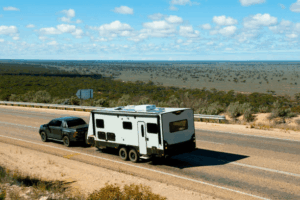
Life on the road has never been more appealing — and for millions of Americans living and traveling in RVs, staying connected isn’t optional. Whether you’re a full-time RVer running a remote business from a campground in Colorado or a weekend traveler who just wants to stream a movie after a long drive, wireless internet for RV travel is one of the most important pieces of the mobile lifestyle puzzle.
The challenge is real. RV connectivity doesn’t come with the reliability of a home broadband connection, and not every solution works in every location. At RingPlanet, we’ve helped travelers and remote workers find wireless internet options that actually perform — not just in theory, but in the day-to-day reality of life on the move.
Why Wireless Internet for RV Living Is More Complex Than Home Connectivity
At home, internet setup is relatively straightforward. A single provider, a router, and a fixed address cover most needs. For RV travelers, the equation is entirely different.
RV internet needs to work across multiple states, shifting terrain, varying signal environments, and constantly changing campground conditions. A solution that delivers fast speeds at a KOA in Arizona may struggle at a remote forest site in Oregon. That variability is what makes choosing the right RV wireless internet setup such an important decision.
Add to that the growing number of RVers who work remotely — attending video calls, submitting projects, accessing cloud platforms — and the demand for reliable mobile connectivity has never been higher.
The Main Options for Wireless Internet in an RV
Understanding the available options is the starting point for every RV traveler building a connectivity strategy. Each option has real strengths and real limitations depending on travel style and location.
Cellular-Based Mobile Hotspots
Mobile hotspots use cellular network coverage to deliver internet to an RV via a portable device or router. This is the most flexible option for travelers who move frequently. Performance depends on the carrier’s coverage map and the strength of signal at each location.
For RVers who stay primarily in well-covered areas — major highways, state parks near urban centers, popular campgrounds — a cellular hotspot from a major carrier delivers solid performance. The limitation is data caps, which can be restrictive for heavy users, and rural areas where signal drops significantly.
5G Wireless Internet
5G wireless internet represents a significant step forward for RV connectivity. In areas with 5G coverage, speeds can rival home broadband — delivering the kind of performance needed for video calls, streaming, remote work, and everyday browsing without the throttling and data anxiety that comes with older cellular solutions.
RingPlanet’s 5G wireless internet is built for exactly this kind of use case — reliable, high-speed connectivity that moves with users rather than tying them to a fixed address. For RVers spending time in and around metro areas or along well-covered travel corridors, 5G is a game-changing option.
RV Park Wi-Fi
Most campgrounds and RV parks offer Wi-Fi as an amenity. In practice, campground Wi-Fi is rarely sufficient for serious use. Shared connections spread across dozens or hundreds of rigs result in slow, unreliable speeds — especially during peak evening hours. Campground Wi-Fi works for light browsing but shouldn’t be counted on for remote work, video streaming, or video calls.
Satellite Internet
Satellite internet reaches areas where no cellular signal exists — deep forests, remote desert locations, and off-grid destinations that serious adventurers seek out. Modern satellite services have improved latency and speeds considerably compared to earlier generations. For RVers who venture truly off the beaten path, satellite provides a connectivity safety net that cellular cannot.
The tradeoff is equipment cost, monthly expense, and the need for a clear sky view — which can be challenging in wooded campgrounds or tight canyon sites.
Wi-Fi Boosters and Signal Amplifiers
Wi-Fi boosters and cellular signal amplifiers don’t create a connection — but they can dramatically improve a weak one. A cellular booster mounted on an RV captures distant tower signals and amplifies them inside the vehicle. For travelers who frequently find themselves on the edge of coverage areas, a booster can be the difference between a usable connection and no connection at all.
How Much Speed Does an RV User Actually Need?
Speed requirements vary based on how the RV connection is used. Here’s a realistic guide:
| Use Case | Minimum Speed | Recommended Speed |
|---|---|---|
| Basic browsing & email | 5 Mbps | 15 Mbps |
| HD video streaming | 10 Mbps | 25 Mbps |
| Video calls (Zoom, Teams) | 5 Mbps up/down | 15 Mbps up/down |
| Remote work with file transfers | 10 Mbps upload | 25+ Mbps upload |
| Multiple users simultaneously | 25 Mbps | 50–100 Mbps |
For solo RVers doing light browsing and occasional streaming, 25 Mbps download is comfortable. For couples or families traveling together — or anyone working remotely — a target of 50–100 Mbps provides meaningful headroom for simultaneous use without performance drops.
Building a Layered RV Internet Strategy
The most connected RVers rarely rely on a single internet source. A layered approach — combining two or more options — provides coverage redundancy that a single solution can’t guarantee.
A common and effective layered setup looks like this:
Primary: Cellular hotspot or 5G wireless — handles the majority of daily internet use in covered areas with fast, reliable speeds.
Secondary: Satellite or campground Wi-Fi — fills in gaps when cellular coverage is weak or unavailable, particularly in remote locations.
Enhancement: Cellular signal booster — amplifies existing cellular signals in fringe coverage areas, squeezing better performance from the primary connection.
This kind of layered strategy is what separates travelers who struggle with connectivity from those who stay reliably connected across diverse environments. RingPlanet’s 5G wireless internet solutions fit naturally into this setup as a high-performance primary connection for RVers who travel through areas with strong 5G coverage.
Key Factors to Evaluate When Choosing RV Internet
Shopping for wireless internet for an RV involves more variables than choosing a home broadband plan. These are the factors that matter most in practice.
Coverage Maps
Coverage maps from carriers and providers show where service is available — but real-world performance often differs from what a map suggests. Elevation, terrain, building density, and tower distance all affect actual signal strength. Before committing to a cellular or 5G plan, check coverage in the specific regions most frequently traveled.
Data Limits and Throttling Policies
Data caps are one of the most frustrating aspects of mobile internet for RV use. Many hotspot plans throttle speeds after a monthly data threshold — sometimes dramatically, from full LTE speeds down to barely usable 600 Kbps. Understanding exactly when and how throttling kicks in prevents unpleasant surprises mid-trip.
Unlimited plans that include a meaningful full-speed data allotment — 50GB, 100GB, or more — before any throttling applies are far more practical for full-time or heavy-use RVers.
Equipment Compatibility
Different 5G and LTE solutions require different hardware. Some plans work with any compatible mobile router; others are tied to specific devices. Understanding equipment requirements upfront prevents compatibility issues and unnecessary additional purchases.
Upload Speed
Remote workers often focus on download speeds but neglect upload. Video calls, file submissions, cloud backups, and content creation all depend on solid upload performance. For RVers working remotely, a plan with at least 10–20 Mbps upload is a practical minimum.
Contract Flexibility
RV travel plans change. A plan that requires a 24-month commitment can become a liability if travel patterns shift or a better solution emerges. Month-to-month or prepaid options offer the flexibility that an unpredictable travel lifestyle demands.
Wireless Internet for RV Remote Workers: Special Considerations
Remote work from an RV has become a genuine lifestyle for a growing segment of the American workforce. For these travelers, internet isn’t just about convenience — it’s a professional requirement.
Remote workers traveling in RVs need to consider:
Backup connectivity. A single point of failure isn’t acceptable when a missed video call or delayed file submission has professional consequences. Having a secondary connection ready to activate instantly is a professional necessity, not a luxury.
Video call performance. Consistent upload speed, low latency, and stable connection quality during calls matter far more than peak download speeds for most remote workers. Choosing a solution with strong upload performance and low jitter is essential.
Business internet considerations. For RVers running a mobile business — consulting, content creation, virtual services — RingPlanet’s business internet solutions offer performance and support designed for professional environments. Business-grade connectivity provides the reliability and uptime commitments that a professional mobile operation requires.
Managing Data Consumption on the Road
Data management is a practical reality for most RV internet setups. A few habits extend monthly data allowances significantly:
- Download content for offline use before leaving a high-signal area. Netflix, Spotify, and many other platforms support offline downloads that consume no mobile data during playback.
- Disable automatic app updates on mobile devices and laptops. Updates can consume gigabytes of data without any action from the user.
- Use campground Wi-Fi for large downloads. Even slow campground Wi-Fi is useful for large software updates, video downloads, or cloud syncs that don’t need to happen instantly.
- Monitor data usage through carrier apps or router dashboards. Knowing daily consumption patterns makes it easier to pace usage throughout the month.
- Compress video call quality settings. Most video conferencing platforms allow users to reduce video quality, which dramatically lowers data consumption during calls without significantly affecting communication.
What the FCC Says About Rural and Mobile Broadband Coverage
Reliable connectivity in rural and remote areas remains one of the most significant broadband challenges in the United States. The FCC’s National Broadband Map provides coverage data across the country and highlights the persistent gaps that affect RV travelers venturing off primary travel corridors.
Federal investment through the Infrastructure Investment and Jobs Act has directed significant funding toward closing rural coverage gaps — but infrastructure expansion takes time. In the near term, 5G wireless internet and satellite solutions provide the most practical path to connectivity in underserved areas.
For RVers who want to understand coverage before a trip, the FCC’s broadband map is a useful planning tool alongside carrier-specific coverage maps.
How RingPlanet Supports RV Travelers and Mobile Lifestyles
RingPlanet understands that connectivity for RV travelers looks nothing like home broadband. The needs are different, the challenges are different, and the solutions have to be flexible enough to move with the traveler.
RingPlanet’s 5G wireless internet delivers the high-speed performance that modern RV living demands — whether that’s streaming entertainment after a long drive, running a remote work session from a campsite, or staying connected with family across time zones. The focus is always on real-world performance in real-world conditions.
RV travelers can explore available options at RingPlanet.com or connect with the RingPlanet team directly to discuss the best wireless internet solution for a specific travel style and geographic range.
Frequently Asked Questions
What is the best wireless internet option for RV travel?
The best option depends on travel style and location. For RVers who stay in well-covered areas, a 5G wireless internet plan or cellular hotspot delivers the best combination of speed and flexibility. For travelers venturing into remote areas, combining a cellular solution with a satellite backup provides the most reliable coverage across diverse environments.
How much data does an RV traveler typically need per month?
A solo RVer using the internet for browsing, occasional streaming, and light remote work might use 30–50GB per month. A full-time remote worker or a couple traveling together with heavier streaming and video call usage can easily consume 100–200GB or more. Choosing a plan with a generous full-speed data allowance prevents throttling during critical usage periods.
Can I use 5G internet in my RV?
Yes. 5G home internet solutions — including those offered by RingPlanet — can be used in RV settings, particularly for travelers who spend time in areas with strong 5G coverage. Modern 5G delivers speeds comparable to home cable broadband, making it a strong choice for remote workers and entertainment-focused travelers who camp in or near metro areas and well-covered travel corridors.
How do I boost my RV internet signal in weak coverage areas?
A cellular signal booster mounted on the RV exterior captures and amplifies distant tower signals, improving connection quality in fringe coverage areas. Positioning the RV for optimal signal — away from obstructions, on higher ground when possible — also improves performance. For truly remote locations, satellite internet provides coverage where cellular signals cannot reach.
Does RingPlanet offer wireless internet solutions for RV travelers?
Yes. RingPlanet offers 5G wireless internet solutions well-suited for RV travelers who need reliable, high-speed connectivity on the road. RingPlanet’s team can help identify the right solution based on travel region, data usage, and specific connectivity needs. Travelers can reach out directly to discuss options tailored to a mobile lifestyle.
Stay Connected on Every Road With the Right Wireless Internet for Your RV
Wireless internet for RV travel has evolved from a frustrating afterthought into a genuinely workable reality — but only when the right solutions are matched to the right travel style. A layered approach combining 5G wireless internet, cellular coverage, and a satellite backup covers the widest range of environments and use cases.
RingPlanet is committed to helping RV travelers and mobile professionals find wireless internet solutions that perform in the real world — on remote mountain roads, at busy campgrounds, and everywhere in between. The goal is simple: keep travelers connected so the journey never has to stop.
Explore RingPlanet’s wireless internet options at RingPlanet.com or get in touch with our team to find the right solution for life on the road.