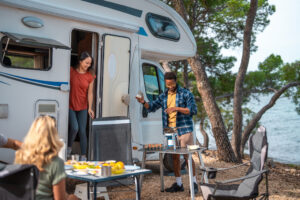
Camping is supposed to be relaxing. But if you’ve ever tried to pull up a map with one bar, stream a movie that won’t load, or send a quick work email that fails three times, you know the reality: bad internet can ruin a great trip. Campground WiFi is often slow, your phone hotspot can be unreliable, and “unlimited” plans don’t always mean what you think.
That’s why more people are searching for the best portable internet for camping in 2026. You want something you can pack, plug in, and trust—whether you’re at a state park, a campground, an RV site, or a cabin in the woods.
In this guide, you’ll learn what portable internet actually is, which options work best, what speeds you need, and how to choose the right setup for your camping style. You’ll also see how RingPlanet delivers portable 5G internet with no contracts, setup in 24–48 hours, 100% US-based support, and a money-back guarantee.
Want to see what’s available where you camp? Check coverage or Get a free quote.
Understanding Best Portable Internet for Camping (And the Biggest Myths)
The best portable internet for camping isn’t “the fastest plan in town.” It’s the setup that works when you’re away from town.
Portable internet for camping usually means one of these: a cellular-based router (4G/5G) you can take anywhere, a hotspot device or your phone acting as a hotspot, satellite internet for remote areas, or a dual setup (primary + backup).
What “Portable” Actually Means
Portable means it isn’t tied to one address, you can take the router or hotspot with you, it works in different locations without getting blocked, and it’s easy to set up and break down. RingPlanet’s solutions are portable by design, so you can travel freely. Explore: portable 5G internet or check coverage.
Common Misconceptions That Waste Money
Misconception #1: Campground WiFi is good enough. Most campgrounds share one network with dozens (or hundreds) of campers. Speeds drop hard at night.
Misconception #2: Any “unlimited” hotspot is truly unlimited. Many plans slow down after a data cap (like 50–150 GB).
Misconception #3: Your phone hotspot is the best solution. Phones are not built to be always-on routers. They overheat, drain battery, and struggle with multiple devices.
Misconception #4: You only need internet for streaming. You also need it for maps, safety, weather alerts, reservations, and staying in touch.
Why You Need the Best Portable Internet for Camping in 2026
Portable internet isn’t just for “work campers” anymore. In 2026, most campers use connected devices every day.
1) Navigation and Trip Planning
Even short trips rely on GPS and traffic updates, campground check-in emails, offline map downloads, and finding fuel, groceries, and trailheads. No internet can mean wasted time and wrong turns.
2) Streaming and Entertainment
If you camp with kids or like winding down at night, streaming matters. Typical streaming needs are HD streaming at 5–10 Mbps, 4K streaming at 25 Mbps+, and two streams at once at 25–50 Mbps. The best portable internet for camping makes streaming feel normal again.
3) Safety and Weather Alerts
Storms, heat warnings, road closures—these things matter a lot more when you’re outside.
4) Remote Work and Emergencies
Even if you “aren’t working,” you may need to handle urgent emails, take a quick call, upload a file, or access accounts and banking.
5) The Cost of Not Having Internet
No portable internet can cost you extra fuel searching for signal, missed campground confirmations, stress and wasted time, inability to contact help, and ruined downtime. If you camp even a few weekends a year, the right setup pays off fast.
Types of Portable Internet for Camping (Options, Speeds, Prices, Pros/Cons)
Here are the most common ways to get the best portable internet for camping.
Option 1: Campground WiFi
Typical speeds: 1–20 Mbps Typical cost: Free
Pros:
- No setup
- No extra bill
Cons:
- Slow at peak times (evenings)
- Unreliable coverage
- Often unsecured
Good for browsing when it works. Bad for streaming, video calls, and anything important.
Option 2: Phone Hotspot (Built-In)
Typical speeds: 5–150 Mbps Typical cost: Included or $10–$30 add-on
Pros:
- Quick and easy
- No extra device
Cons:
- Limited data before slowdowns
- Battery drain
- Weak antenna
- Not great for multiple devices
Good for solo travelers and quick tasks. Not usually the best portable internet for camping long-term.
Option 3: Dedicated Hotspot Device
Typical speeds: 10–200 Mbps Typical cost: $30–$100/month
Pros:
- Better than phone hotspot
- More stable
- Portable
Cons:
- Still limited by data caps
- Can throttle hard
- Not always ideal for heavy streaming
Good for light-to-medium use.
Option 4: Portable 4G/5G Router (Best All-Around for Most Campers)
Typical speeds: 25–500 Mbps (location-dependent) Typical cost: $29+ per month
Pros:
- Stronger connection than a phone
- Supports more devices
- Better for streaming and work
- Easy to set up
Cons:
- Coverage varies by campground and terrain
This is where RingPlanet stands out for campers. RingPlanet offers portable 5G wireless internet you can bring on your trips without being tied to one address. Explore: wireless internet options. Get a free quote.
Option 5: Satellite Internet
Typical speeds: 25–200 Mbps Typical cost: $90–$200+/month
Pros:
- Works in very remote areas
- Doesn’t depend on cell towers
Cons:
- Higher cost
- Higher upfront equipment
- Weather can affect service
- Setup can be more involved
Good for deep off-grid campers. Not always the best portable internet for camping if you’re in mixed locations.
Option 6: Travel Router + Public WiFi (Hotels, Cafes)
Typical speeds: 5–200 Mbps Typical cost: Free to low
Pros:
- Cheap
- Useful in a pinch
Cons:
- Not reliable in nature
- Not secure
- Not available when you need it most
Option 7: Dual Setup (Primary + Backup)
If you want the most reliable portable internet for camping, use a primary portable router (RingPlanet 5G) and a backup plan (phone hotspot or second device). RingPlanet also supports backup internet setups.
How to Choose the Best Portable Internet for Camping
The best portable internet for camping depends on how you camp. These questions make it simple.
Step 1: Identify Your Camping Style
Weekend camper: You mainly need maps, music, and occasional streaming.
Family camper: You need multiple devices, streaming, and reliable signal at night.
Remote worker camper: You need stable internet for calls, uploads, and deadlines.
Off-grid camper: You need coverage where cell towers may be limited.
Step 2: Match Your Speed to What You Do
- Basic use (maps, email): 5–10 Mbps
- HD streaming: 10–25 Mbps
- 4K streaming: 25–50 Mbps
- Video calls: 10–25 Mbps with stable upload
- Family + streaming + work: 50–200 Mbps
If you want the best portable internet for camping that “just works,” aim for 50+ Mbps in most areas.
Step 3: Look for These Features
A camping-friendly solution should have true portability (not address-locked), no long-term contracts, quick setup and support, enough speed for your devices, and good coverage in your camping areas. RingPlanet is built around these needs. Check coverage to confirm where you camp.
Step 4: Avoid These Common Mistakes
#1: Picking the cheapest plan without checking coverage — coverage matters more than the advertised speed.
#2: Assuming phone hotspots can run a family’s streaming — they often can’t.
#3: Ignoring router placement in your camper or tent setup — placement can change performance dramatically.
#4: No backup plan for remote work — if the connection matters, build redundancy.
Use Cases: Best Portable Internet for Camping (What to Buy Based on Who You Are)
Families Camping With Kids
You need multiple device support, steady streaming, and reliable evening performance.
Recommendation: RingPlanet portable 5G router + optional backup plan. Explore: internet for streaming
Remote Workers Who Camp
You need stable video calls, reliable upload speeds, and fast troubleshooting help.
Recommendation: RingPlanet 5G internet + backup failover option. Learn more: internet for remote work
Small Business Owners (On-the-Go)
If you camp while running a business, you may need POS payment capability, always-on connection, and the ability to work anywhere.
Recommendation: RingPlanet portable 5G internet with business-ready flexibility. See: business wireless internet
RingPlanet Plans for Camping (Portable 5G, No Contracts)
RingPlanet makes it simple to get the best portable internet for camping without being tied down.
| Plan Tier | Best For | Typical Speeds | Starting Price | Highlights |
|---|---|---|---|---|
| Starter 5G | Weekend camping + basics | 25–100 Mbps | $29+ | No contracts, quick setup |
| Standard 5G | Families + HD streaming | 50–200 Mbps | $49+ | Stronger multi-device support |
| Premium 5G | Heavy streaming + remote work | 100–500 Mbps | $79+ | Best performance for power users |
| Backup Add-On | Work insurance | Varies | $29+ | Adds redundancy + peace of mind |
Why Campers Like RingPlanet
- No long-term contracts
- Setup in 24–48 hours
- 100% US-based customer support
- Money-back guarantee
- Portable equipment you can take anywhere
Installation & Troubleshooting for Camping Internet
You don’t need to be technical to get camping internet working well.
DIY Setup (Fast and Simple)
- Unbox your RingPlanet router
- Plug it into power
- Place it near a window or open area
- Connect your devices via WiFi
- Run a speed test
- Stream a short video to confirm
Best Placement Tips (These Matter)
- Put the router higher up when possible
- Try a window-facing location
- Avoid thick metal walls (they block signal)
- If you’re in a forested area, try the side facing the road/open space
- Reboot once a week for smoother performance
Quick Fixes If Speeds Drop
- Restart the router
- Move it 3–10 feet (yes, really)
- Switch devices to 5 GHz WiFi for streaming
- Pause big downloads while streaming
- Add a backup plan if you rely on internet for work
Need help? RingPlanet’s US-based team can guide you quickly. Contact support.
Cost Analysis: What You’ll Pay for Portable Internet (And What You Save)
Portable internet costs depend on how often you camp and how much you use.
Typical Monthly Costs in 2026
- Phone hotspot add-on: $10–$30
- Dedicated hotspot: $30–$100
- RingPlanet portable 5G: $29+
- Satellite: $90–$200+
ROI: Why the Right Plan Is Worth It
The best portable internet for camping can save you time driving for signal, frustration at night when networks clog, missed reservations or map issues, and lost work time (if you work remotely). Even one weekend saved from “bad WiFi stress” can feel worth it.
Comparison: Best Portable Internet for Camping vs Phone Hotspot
Phone hotspots are the default option, so let’s compare them honestly.
Advantages of Phone Hotspot
- Easy
- No extra device
- Works in many places
Limitations of a Phone Hotspot
- Weak antenna
- Battery drain
- Overheating
- Data throttling
- Struggles with multiple devices
RingPlanet Portable 5G Pros
- Built for multi-device use
- Stronger, more stable connection
- No long-term contracts
- Setup in 24–48 hours
- US-based support
- Money-back guarantee
If you camp often, RingPlanet usually beats a phone hotspot for comfort and reliability.
FAQs: Best Portable Internet for Camping (2026)
1) What is the best portable internet for camping?
For most campers in 2026, it’s a portable 5G router because it’s stable, supports multiple devices, and works in many locations.
2) Is portable internet for camping expensive?
It can be affordable. RingPlanet starts at $29+, which is competitive for reliable service.
3) Can I stream movies while camping?
Yes, if you have enough speed. HD streaming often needs 10–25 Mbps. 4K needs 25 Mbps+.
4) Is campground WiFi good enough for streaming?
Usually not, especially at night when everyone is online.
5) Does RingPlanet work in rural areas?
Yes, coverage includes rural areas, but performance depends on local signal strength.
6) Is RingPlanet portable, or tied to one address?
RingPlanet is designed to be portable, so you can take it with you.
7) How long does setup take?
RingPlanet can typically set you up within 24–48 hours.
8) Does RingPlanet require a contract?
No. RingPlanet offers no long-term contracts.
9) How many devices can I connect?
Most users can connect multiple devices like phones, tablets, laptops, Roku, and Smart TVs.
10) What speed do I need for camping internet?
Basic use: 5–10 Mbps. Streaming and families: 25–100+ Mbps.
11) Should I get satellite internet for camping?
Only if you camp very far from cell towers often. For mixed camping, 5G is usually easier and cheaper.
12) How can I improve internet in a campground?
Use a dedicated router, place it near a window, and avoid relying on crowded campground WiFi.
13) Is there a money-back guarantee?
Yes. RingPlanet offers a money-back guarantee.
14) What if my signal is weak at my campsite?
Move the router, elevate it, and consider a backup plan for critical needs.
15) What’s the best setup for working while camping?
A portable 5G router (RingPlanet) plus a backup hotspot.
16) Can I use portable internet in a tent?
Yes. As long as you can power the device and you have coverage, it can work.
17) Do portable internet plans get throttled?
Some do. It depends on the provider and plan terms.
18) How do I check RingPlanet coverage?
Use: Check coverage
19) Can I use RingPlanet for a weekend trip and stop later?
With no long-term contracts, you have more flexibility than traditional providers.
20) Is portable 5G internet worth it for camping?
If you camp often or need reliable streaming, maps, or work access, yes.
Conclusion: Best Portable Internet for Camping in 2026
If you want the best portable internet for camping in 2026, focus on reliability, portability, and coverage—not just marketing speed claims. Here’s what works best: campground WiFi is a bonus, not a plan; phone hotspots work for light use, but struggle for families; portable 5G routers are the best all-around option for most campers; and remote work campers should have a backup plan.
Ready to camp without the WiFi stress? RingPlanet delivers portable 5G internet with no contracts, setup in 24–48 hours, US-based support, and a money-back guarantee—so you can stay connected wherever your campsite is. Get in touch to find the right plan before your next trip.