Apartment living and traditional internet installation were never a great match. Cable companies require technician visits, drilling through walls, and coordination with building management that doesn’t always cooperate. Annual contracts penalize renters who move when leases end. And in dense apartment buildings, shared infrastructure creates peak-hour congestion that makes advertised speeds feel like fiction.
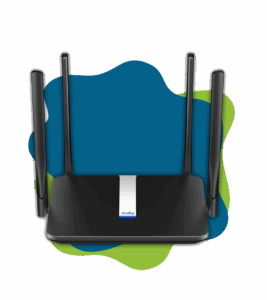
Wireless internet for apartments solves all of these problems. A wireless internet setup arrives by mail, plugs into power, and connects in minutes without a technician, without drilling, and without requiring landlord permission for infrastructure modifications. For apartment dwellers across the United States, the combination of improving 5G coverage and month-to-month plan flexibility has made wireless broadband the most practical internet option available in 2026.
At RingPlanet 5G wireless internet, we help apartment residents find wireless internet solutions that match the realities of renter life. This guide covers everything apartment dwellers need to know to choose the right wireless internet option.
Why Wireless Internet Works So Well for Apartment Living
The challenges of getting internet in an apartment are different from those in a house. Apartment residents face a specific set of constraints that wireless internet addresses directly.
Installation complexity is the first constraint. Cable and fiber installations in apartment buildings require running physical lines through shared building infrastructure. This often requires building management approval, scheduled technician visits during business hours, and sometimes weeks of waiting for available appointment slots. A wireless internet gateway bypasses all of this. It connects to cellular tower infrastructure that already exists outside the building, requiring no physical connection to the building itself.
Lease term flexibility is the second constraint. A 12-month cable contract signed in September creates problems when the lease ends in August. Early termination fees of $100 to $400 turn a normal end-of-lease move into an unexpected expense. Wireless internet for apartments with month-to-month terms ends cleanly when the lease ends, with no financial penalty and no equipment pickup scheduling.
Building Wi-Fi limitations represent the third constraint. Many apartment buildings offer shared Wi-Fi as an amenity. Shared apartment building Wi-Fi is rarely adequate for serious use. Performance degrades during evening hours when hundreds of residents use the same network simultaneously, security on shared networks is fundamentally lower than a private connection, and building Wi-Fi typically offers no performance guarantees.
Personal wireless internet for apartments provides a private, dedicated connection with consistent performance that building amenity Wi-Fi simply can’t match.
Types of Wireless Internet Available for Apartment Residents
Several wireless internet technologies serve apartment dwellers, each with distinct performance characteristics.
5G Home Internet
5G wireless home internet is the strongest wireless option currently available for apartments in covered areas. Modern 5G delivers download speeds of 100 to 400 Mbps with upload speeds of 20 to 100 Mbps, fully competitive with cable broadband performance. A 5G gateway plugs into power, connects to the nearest 5G tower, and distributes private Wi-Fi throughout the apartment.
RingPlanet’s 5G wireless internet brings this broadband-level performance to apartment residents without installation appointments, contract commitments, or dependence on building infrastructure. For apartment residents in areas with strong 5G coverage, this is the most practical and capable wireless internet option available.
4G LTE Home Internet
LTE home internet is available more broadly than 5G, covering many suburban and rural areas where 5G hasn’t yet arrived. LTE delivers download speeds of 25 to 100 Mbps, adequate for individual users and light household use. For apartment residents in areas without 5G coverage, LTE home internet provides a viable wireless broadband alternative to cable.
Mobile Hotspot Plans
Phone-based mobile hotspots work as emergency or temporary internet solutions but have significant limitations for primary apartment internet use. Data caps, throttling after monthly thresholds, and device battery drain make hotspot plans impractical for residents who use the internet heavily throughout the day.
How Much Speed Does an Apartment Resident Actually Need?
Speed requirements depend on how the internet gets used and how many devices share the connection simultaneously.
| Apartment Use Case | Minimum Speed | Recommended Speed |
| Single user, light browsing | 10 Mbps | 25 Mbps |
| Single remote worker | 25 Mbps up/down | 50 Mbps up/down |
| HD streaming, single device | 10 Mbps | 25 Mbps |
| 4K streaming | 15 Mbps | 35 Mbps |
| Two users, mixed use | 50 Mbps | 100 Mbps |
| Roommate apartment, 3 to 4 users | 100 Mbps | 200 Mbps |
For most single-occupant apartments, 5G wireless internet delivering 100 to 200 Mbps provides comfortable headroom for all simultaneous activities. For shared apartments with multiple residents using the internet at the same time, 200 Mbps or higher ensures nobody’s experience suffers because of what someone else is doing on the network.
Setting Up Wireless Internet in an Apartment
One of the most appealing aspects of wireless internet for apartments is setup simplicity. The process typically takes under an hour with no special tools required.
Gateway Placement for Best Signal
The gateway device connects wirelessly to the nearest cellular tower, so placement relative to external walls and windows significantly affects signal quality and internet performance.
Placing the gateway near a window facing the direction of the nearest tower maximizes signal reception. Testing performance at different window positions within the apartment can reveal a noticeably stronger signal location. Most gateways include signal strength indicators that simplify this testing process.
Avoid placing the gateway in enclosed spaces, behind large metal appliances, or in rooms with thick concrete or masonry walls between the device and the exterior. These obstacles reduce signal penetration and limit the gateway’s connection to the tower.
Wi-Fi Distribution in the Apartment
Once the gateway connects to the cellular network, it distributes Wi-Fi throughout the apartment. Most modern gateways deliver strong Wi-Fi coverage across typical apartment floor plans. For larger or irregularly shaped apartments, adding a Wi-Fi extender or mesh node improves coverage in rooms distant from the gateway.
A wired Ethernet connection from the gateway to a primary device, such as a desktop computer or smart TV, delivers the most stable and consistent performance for applications where reliability matters most.
Wireless Internet for Apartments in Dense Urban Buildings
Dense urban apartment buildings present specific signal challenges that are worth understanding when evaluating wireless internet options.
Concrete construction common in mid-rise and high-rise urban apartment buildings attenuates cellular signals more significantly than wood-frame construction in suburban apartments. Residents in interior units without exterior window access face greater signal challenges than residents in corner units with multiple exterior-facing windows.
For apartments with challenging signal environments, selecting a gateway model that supports external antenna connections provides a path to improved performance. An external antenna placed at a window or exterior-facing location captures a significantly stronger signal than any internal placement inside a concrete-walled building.
Despite these challenges, 5G wireless internet delivers workable or strong performance in the majority of urban apartment situations where 5G coverage is available, because 5G’s mid-band frequencies balance coverage range with signal penetration capability.
Contract Flexibility: The Underrated Advantage of Wireless Internet for Apartments
The contract flexibility of wireless internet for apartments deserves specific attention as a financial benefit that compounds over a renter’s housing history.
A typical urban renter who moves every one to two years faces two to four lease transitions over a four-year period. At each transition, a cable contract with a 12-month term creates either a timing alignment problem or an early termination fee. Over four years, two early termination fees alone can cost $200 to $800, an amount that more than offsets any savings from a lower promotional cable rate.
Month-to-month wireless internet for apartments eliminates this risk entirely. Service ends when the lease ends, with no financial penalty and no scheduling burden. For renters who value mobility and flexibility in housing decisions, this is a genuine and measurable financial benefit.
What the FCC’s Data Shows About Wireless Broadband in Apartments
The FCC’s Communications Marketplace Report consistently documents that apartment residents in dense urban markets have historically faced fewer competitive broadband options than single-family homeowners in suburban areas, making wireless broadband expansion particularly meaningful for urban renters.
Independent speed test data from Ookla’s Speedtest Intelligence shows that 5G home internet providers are delivering real-world speeds increasingly competitive with cable broadband in urban markets, reinforcing the practical viability of wireless internet as a primary apartment broadband solution.
How RingPlanet Serves Apartment Residents
RingPlanet’s 5G wireless internet solutions give apartment residents broadband-level connectivity without the installation complexity and contract commitments that cable internet requires. The service starts quickly, performs reliably in areas with strong 5G coverage, and ends cleanly without financial penalty when a lease concludes.
For apartment residents ready to explore a wireless internet option that fits renter life, the RingPlanet team can help evaluate coverage at a specific address and identify which plan delivers the right combination of performance and flexibility.
Residents can visit RingPlanet 5G wireless internet or connect with the RingPlanet team directly to discuss coverage availability and plan options for a specific apartment address.
Frequently Asked Questions
Can I get wireless internet in my apartment without a technician visit?
Yes. 5G wireless internet gateways are self-installed. The device plugs into power and connects to the network without any technician or building permission required.
Is wireless internet fast enough for remote work in an apartment?
Yes. Modern 5G delivers 100 to 400 Mbps, fully adequate for video calls, VPN connections, and file transfers that remote work demands.
Does wireless internet work in apartments with concrete walls?
Yes, though signal strength varies. Placing the gateway near an exterior-facing window maximizes signal reception in concrete-construction buildings.
Can I share wireless internet with apartment roommates?
Yes. A single 5G gateway supports multiple simultaneous users. For three to four roommates, a plan delivering 200 Mbps or higher provides comfortable shared performance.
Does RingPlanet offer month-to-month wireless internet for apartments?
Yes. RingPlanet provides 5G wireless internet on a month-to-month basis with no annual contract or early termination fees.
Wireless Internet for Apartments: The Smart Choice for Renters in 2026
Wireless internet for apartments delivers the combination of speed, flexibility, and setup simplicity that renter life actually requires. No installation appointments. No annual contracts. No early termination fees. Just a gateway that plugs in, connects, and delivers reliable broadband-level performance throughout the lease.
RingPlanet’s 5G wireless internet gives apartment residents a practical, high-performance internet option that fits the real rhythm of renter life across the United States.
Explore RingPlanet’s apartment internet solutions at RingPlanet 5G wireless internet and take the first step toward connectivity that moves with a rental lifestyle.